Our History
NunatuKavut Inuit have lived on our homelands, in what is mainly in Southern and Central Labrador, since time immemorial. Over the centuries, encounters with European colonizers on Inuit lands and waters was intermittent and involved both trade and conflict.
Colonizers relied on our ancestors for skills and knowledge critical to their survival, yet encroached on our land and communities, which our ancestors vehemently resisted.
Early Presence
Archaeological evidence proves that NunatuKavut Inuit have lived in Southern and Central Labrador for countless generations. Throughout our territory and as far south as the Quebec North Shore, sites like hunting camps, dwellings, and tools show established communities and not temporary or seasonal visitors. These findings, combined with oral histories passed down through generations, affirm our deep and enduring connection to this land, long before European contact.
First Contact
Our ancestors first encountered European whalers and explorers in the 1500s. These early meetings were marked by both cooperation and conflict. Basque, French, and English ships relied on Inuit knowledge to survive, yet also sought to exploit our lands and resources. Through trade, negotiation, and resistance, NunatuKavut Inuit maintained our presence and identity along these coasts.
The British-Inuit Treaty of 1765
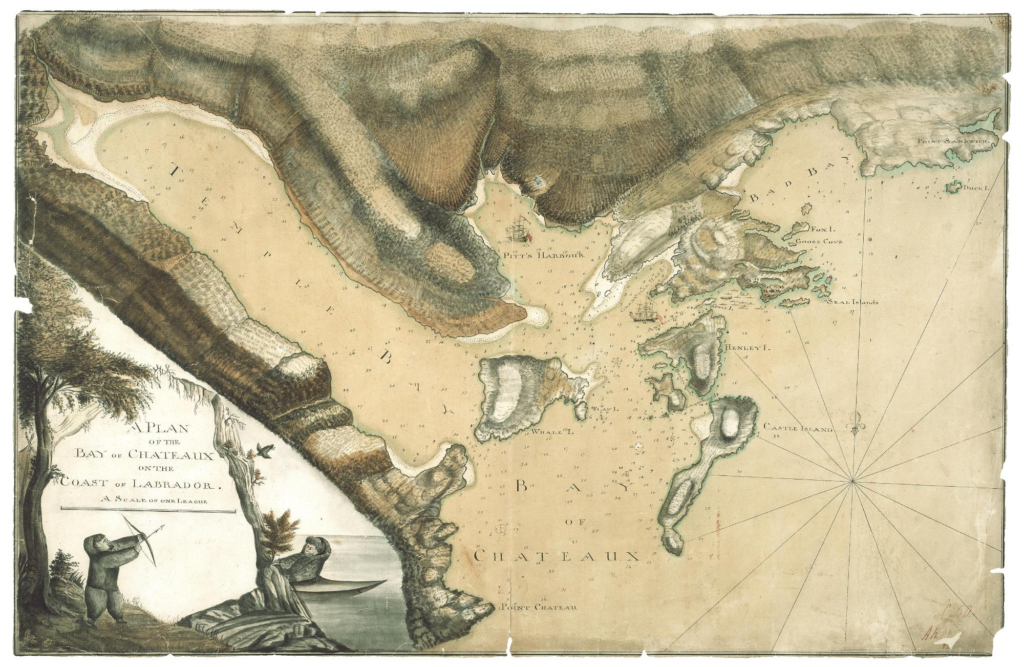
In August 1765, a Peace and Friendship Treaty was entered into between British officials and the Inuit of southern Labrador at Chateau Bay. This historic agreement formally acknowledged that Inuit were the rightful and established inhabitants of the lands and waters of what we now call NunatuKavut.
Far from a surrender, the treaty reaffirmed Inuit ownership and governance over our territory. It was part of a broader British strategy to promote peace and trade – but it also respected our autonomy, identity, and longstanding relationship with the land. The Inuit signatories were not passive participants; our ancestors came to the table as leaders, negotiating in the interest of their people and their future.
The 1765 Treaty was formally entered into the colonial record by the British Lords of Trade in 1769. It stands today as a foundational document in our shared legal and historical record, and as an early affirmation of the rights we continue to assert.
To explore the full history and significance of the British-Inuit Peace and Friendship Treaty of 1765, download our commissioned research report using the link below.
Era of Colonization
Unlike our cousins to the north, we experienced a different kind of colonization. While settlers depended on our skills and knowledge to survive here, they also encroached on our lands, disrupted our communities, and worked to erase our traditions and ways of life – reshaping us to fit their world instead of respecting our own.
We were not confined to reserves or relocated en masse, but our way of life was systematically targeted. Place names were replaced, language was eroded, and missionaries sought to convert and control. Epidemics like the Spanish Flu devastated communities, and residential schools worked to sever our children from their culture. Despite these attempts, our identity endured quietly in homes, on the land, and in our stories.
Cultural Revitalization
Today, we are reclaiming and revitalizing what was taken. The NunatuKavut Community Council leads initiatives in language, traditional knowledge, cultural practices, and youth engagement to ensure that our heritage is not only remembered but continuously lived. Grounded in our ancestors’ resilience, the strength of our people drives us forward toward self-governance and recognition.
NunatuKavut Through the Centuries
Scroll through the timeline below to explore key moments in the storied history of our people.
First European Contact and Conflict Begins
Europeans visited the lands of our Inuit ancestors for exploration and observed Inuit all along the Labrador coast. Some Europeans began capturing Inuit for profiteering novelty shows and slave trading; resulting in many conflicts between Europeans and Inuit.
Defending Our Territory From Colonial Expansion
Itinerant Spanish Basque whalers and sealers interacted with our ancestors in Southern Labrador. For most of this century and the beginnings of the 1700s, Inuit prevented Europeans from expanding commercial operations further north beyond Cape Charles (Ikkigockeatuie) along our coastline.
Trade, Resistance, and Forced Captivity
Inuit defense of homeland and novel innovation and trade is evident as a period of conflicts with the French (who were trying to invade our territory for trade benefits) were occurring. These conflicts often resulted in the death of both Inuit and French. Some Inuit women and children were captured by French for farm and domestic slaves at Quebec.
A Peace Treaty is Entered at Chateau Bay
In August of 1765, a Treaty was entered into between our Inuit ancestors and the British. The British-Inuit Treaty of 1765 recognized that our Inuit ancestors were permanent and rightful owners of the lands and waters in NunatuKavut, the same areas we occupy today. Inuit agreement to the Treaty reflected continued Inuit self-governance and self-determination.
Migration, Intermarriage, and Mercantile Disruption
This period brought a seasonal migratory Newfoundland fishery to our coast. When Newfoundlanders returned to their home port, our Inuit ancestors remained and governed our lives accordingly, with limited colonial laws and influences. Intermarriage between some Inuit women and European men became more pronounced during the middle part of the 1800s. This was also when the mercantile system became more prominent and disruptive to the way of life for our Inuit ancestors.
Anglican Mission Targets NunatuKavut Communities
The first Church of England (Anglican today) was consecrated by Bishop Edward Field at St. Francis Harbour . It was constructed with the sole intent of proselytizing the ‘Eskimo.’ Rev. Henry Disney conducted school in Francis Harbour for two years prior to the church being built.
Inuit Children Sent to Residential Schools
NunatuKavut Inuit children were sent to residential schools run by the Anglican Church and then the International Grenfell Association (IGA). In particular, the IGA sought to remove children from a culture and family system that they did not understand and saw as uncivilized. The last residential school in NunatuKavut closed in 1980.
Confederation Ignores Indigenous Peoples
The Province of Newfoundland joined Confederation. Our people had no say in this decision nor were any Indigenous peoples recognized in the Newfoundland Terms of Union with Canada.
Seasonal Living Disrupted by Church and State
Inuit culture of shifting with the seasons was severely impacted by the church and government. These colonizing institutions sought to settle our people into year-round, permanent communities for the promise of schooling and other “public” services.
Upper Churchill Development Proceeds Without Consent
The Upper Churchill Project begins without NunatuKavut Inuit consent, causing much destruction and impact to our lands, waters and people.
Inuit Begin to Organize for Recognition
As in other parts of Canada, Indigenous peoples in Labrador started to organize and stand up for their rights and recognition, forming their own representative organizations. During this time, our people were very busy trying to establish community governance in our now permanent communities with limited or no government support.
Claim Work Begins with Labrador Métis Association
Inuit from NunatuKavut began working to gain federal recognition of our rights, first through the creation of the Labrador Métis Association (LMA) in 1986 and then with the filing of an Inuit-based Comprehensive Land Claim (CLC) submission through the Government of Canada in 1991.
Protest at Natsitok; Our Nationhood Acknowledged
Our people united at Natsitok (on Eagle River) to fight the construction of a fishing camp, strongly protesting against outsiders who came onto our lands and waters, without our consent. In the final report from the Royal Commission on Aboriginal Peoples (RCAP), our people were recognized as Indigenous, stating that our community “exhibits the historical rootedness, social cohesiveness and cultural self-consciousness that are essential to nationhood, and they are developing a political organization that will allow them to engage in effective nation-to-nation negotiation and to exercise self-government.”
Fishing Protests Lead to First Communal Agreement
A series of fishing protests by our people resulted in the negotiation of our first Communal Fishing Agreement with the Department of Fisheries and Oceans. Each year, NunatuKavut Inuit continue to fish for food as we have always done.
Court Confirms Credible Indigenous Rights Claim
Following a successful court case in 2005, the Newfoundland and Labrador Court of Appeal held that NunatuKavut Inuit have Indigenous rights in our territory, and have a credible claim.
NCC Constitutional Reform Reflects Inuit Identity
As we continued to strengthen our Inuit governance, our governing organization brought in constitutional changes and became the NunatuKavut Community Council (NCC). These changes more appropriately reflected our Inuit history and culture.
Shared Understanding Reached for National Park Preserve
NCC signed a Shared Understanding Agreement (SUA) with Parks Canada around the Akami-UapishkU-KakKasuak-Mealy Mountains National Park Reserve after years of engagement and dialogue. The SUA provides a framework for consultation, cooperative management and planning on the Park. It recognizes our longstanding connection to the Park and acknowledges that we have asserted Inuit rights in the area.
Protests Highlight Churchill and Muskrat Falls Impacts
NCC fought for years to gain recognition of the Upper Churchill project’s infringements on our people’s rights. After opposing plans for the Muskrat Falls project, we engaged in a series of protests highlighting the impacts of these projects on NunatuKavut Inuit lands, waters and people.
Residential School Apology and MMIWG Participation
Prime Minister Justin Trudeau issued an apology to Labrador survivors, including the NunatuKavut children who attended residential schools. NCC received official legal standing and funding to participate in the institutional, knowledge-keeper and expert hearings around the National Inquiry into Missing and Murdered Indigenous Women and Girls (MMIWG). After many years of not being consulted or respected regarding major resource projects in our territory, NCC signed a significant agreement with Nalcor Energy called a Community Development Agreement.
NCC Enters Federal Recognition and Rights Process
After decades of advocacy, representivity and extensive research, the Government of Canada accepted NCC into the Recognition of Indigenous Rights and Self-Determination (RIRSD) process. Through this process, we are working with Canada to reach agreements that will advance self-government and self-determination for NunatuKavut Inuit.
MOU Signed with Canada to Advance Self-Government
A Memorandum of Understanding (MOU), guiding the relationship between the Government of Canada and the NCC, was formalized. Mutual areas of interest were outlined with respect to the recognition and implementation of agreements regarding section 35 rights, jurisdiction, and service delivery that reflect the priorities of our people.
NCC Recognized Under Provincial Law and Memorial Charter
NunatuKavut Inuit became an integral part of the founding constitution of the School of Arctic and Subarctic Studies (SASS), Labrador Campus of Memorial University. NCC was incorporated into the provincial Children, Youth and Families Act (CYFA) and recognized as an Indigenous governing body with rights to provide support to NunatuKavut Inuit children and youth in care.
MOU on Education and Agreement on Federal Standing
NCC and the Province of Newfoundland and Labrador signed a Memorandum of Understanding (MOU) on education. This MOU reflects the mutual interests of both parties to ensure that the culture and history of NunatuKavut Inuit are reflected in our provincial school system. Federally, NCC was granted standing as an Inuit Group to appear before the Supreme Court of Canada in Quebec’s challenge to Bill C-92, An Act Respecting First Nations, Inuit and Metis Children Youth and Families.
Strengthened Governance and Global Recognition
NCC transitioned to a strengthened Inuit governance structure and shared-leadership model rooted in Inuit identity, values, practices and traditions. We also gained special consultative status with the UN’s Economic and Social Council (ECOSOC), expanding our international voice. On Sept. 29, on the eve of the National Day for Truth and Reconciliation, Premier Andrew Furey apologized to NunatuKavut residential-school survivors for the Province’s role.
A Stronger Constitution for a Stronger Future
NunatuKavut Inuit approved a strengthened Inuit governing constitution. NCC also approved a new Citizenship Law. This ensures that governance is reflective and inclusive of Inuit values and communities across NunatuKavut.
Recognition, Readiness, and Renewal
Today, NCC is recognized by provincial, federal and international bodies, including the UN, as a rights-bearing Indigenous organization. But true reconciliation requires action. NunatuKavut Inuit have always adapted to changing lands, governments and times. We carry that forward through a modern Inuit governance model rooted in our identity, values and laws. We are ready, organized, and moving ahead—as we always have.